Website visitor qualification software identifies which of your visitors are actually worth sales attention — and it matters because most B2B websites convert at just 2–3%, meaning roughly 97% of traffic leaves without a trace. These tools turn that math around by analyzing behavioral signals, firmographic data, and engagement patterns to surface qualified visitors: identifying the companies behind anonymous traffic, scoring intent, and routing serious buyers to sales before they slip away.
The category splits into a few distinct jobs — qualification at the point of capture, anonymous visitor identification, real-time sales conversations, and account-level intent — and the right tool depends on which gap is costing you the most. Here are nine worth evaluating in 2026, with pricing where vendors publish it.
1. OrbitForms
Best for: qualifying visitors at the moment they convert, inside the form itself
OrbitForms is a form builder — standard and conversational — with AI qualification agents that score and route leads in real time as visitors fill out a form.
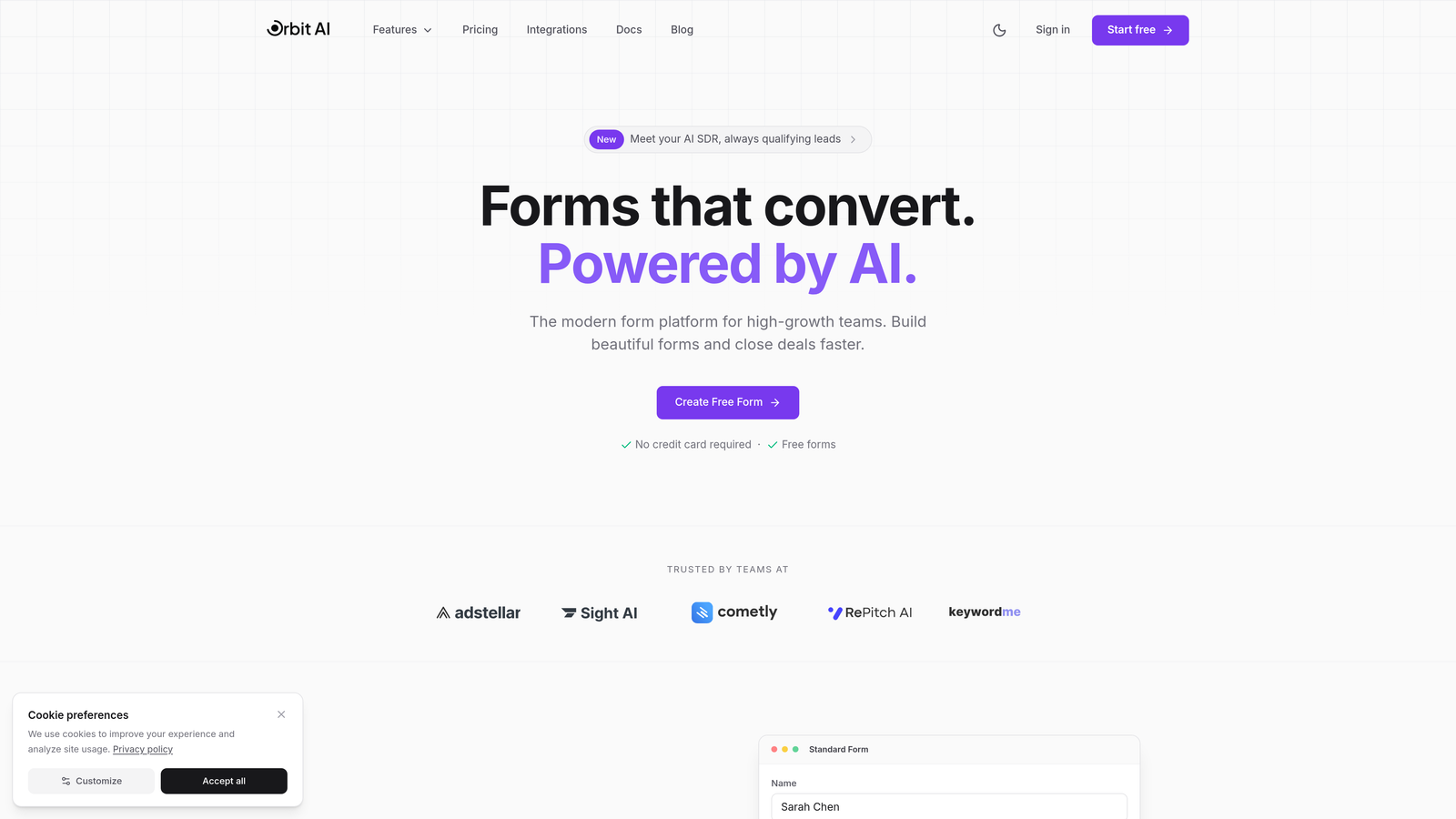
Most tools in this list qualify visitors after the fact. OrbitForms does it during capture: the agent reads responses as they come in, asks follow-up questions when an answer warrants it, and adapts the flow based on qualification signals like company profile, use case, or budget. Conversational forms tend to hold attention better than a static wall of fields, so you're gathering richer qualification data without tanking completion.
The output is a scored, routed lead rather than a raw submission — high-value visitors go to sales (or straight to a booked meeting via the built-in scheduler), lower-priority ones drop into nurture sequences. Everything syncs to your CRM; there are integrations with around 30 of them, including HubSpot, Salesforce, Pipedrive, and Zoho. The boundary to understand: it qualifies visitors who engage with a form. It doesn't identify the anonymous 97% — pair it with a visitor-ID tool below if that's your gap.
Pricing: Quoted on a short demo; Orbit has no free plan. Book a demo to see it with your own forms.
2. Clearbit Reveal
Best for: identifying anonymous visitors through IP-to-company matching
Clearbit Reveal matches website visitors to company profiles using IP data, attacking the anonymous-traffic problem directly.
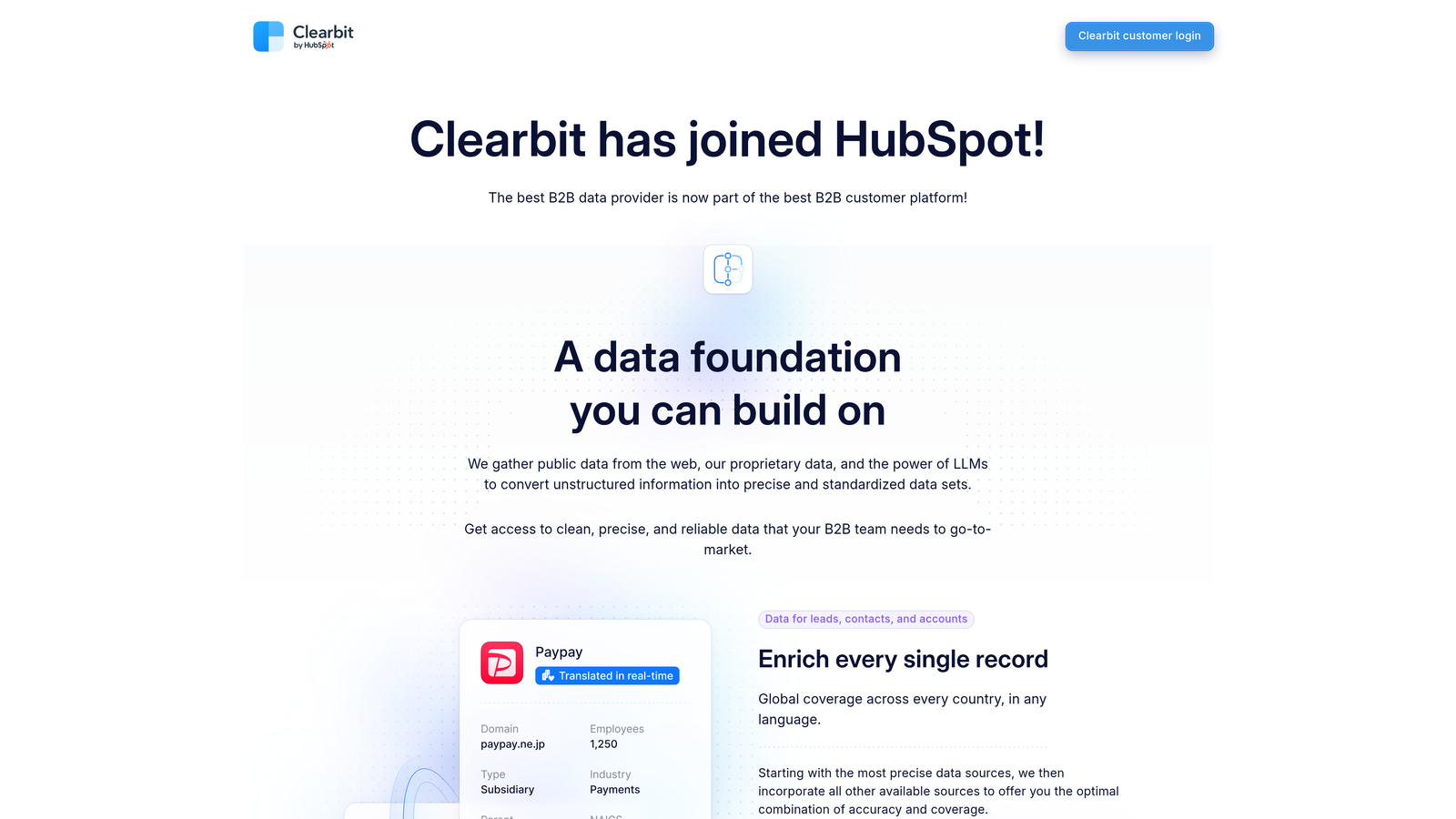
Even when nobody fills out a form, Reveal shows which companies were on your site, enriched with industry, employee count, revenue, and technology stack, plus page-level tracking to gauge what they cared about. That feeds two workflows: sales prioritizes outreach to companies already researching you, and marketing builds retargeting audiences segmented by company attributes. Identified companies push directly into Salesforce, HubSpot, or Marketo.
Pricing: Custom, based on monthly traffic volume; typically starts in the mid-market range.
3. 6sense
Best for: enterprise ABM teams needing AI-predicted buying stages and cross-web intent
6sense qualifies at the account level, analyzing intent signals across the entire web — not just your own site — to predict which accounts are in-market and where they sit in the buying journey.
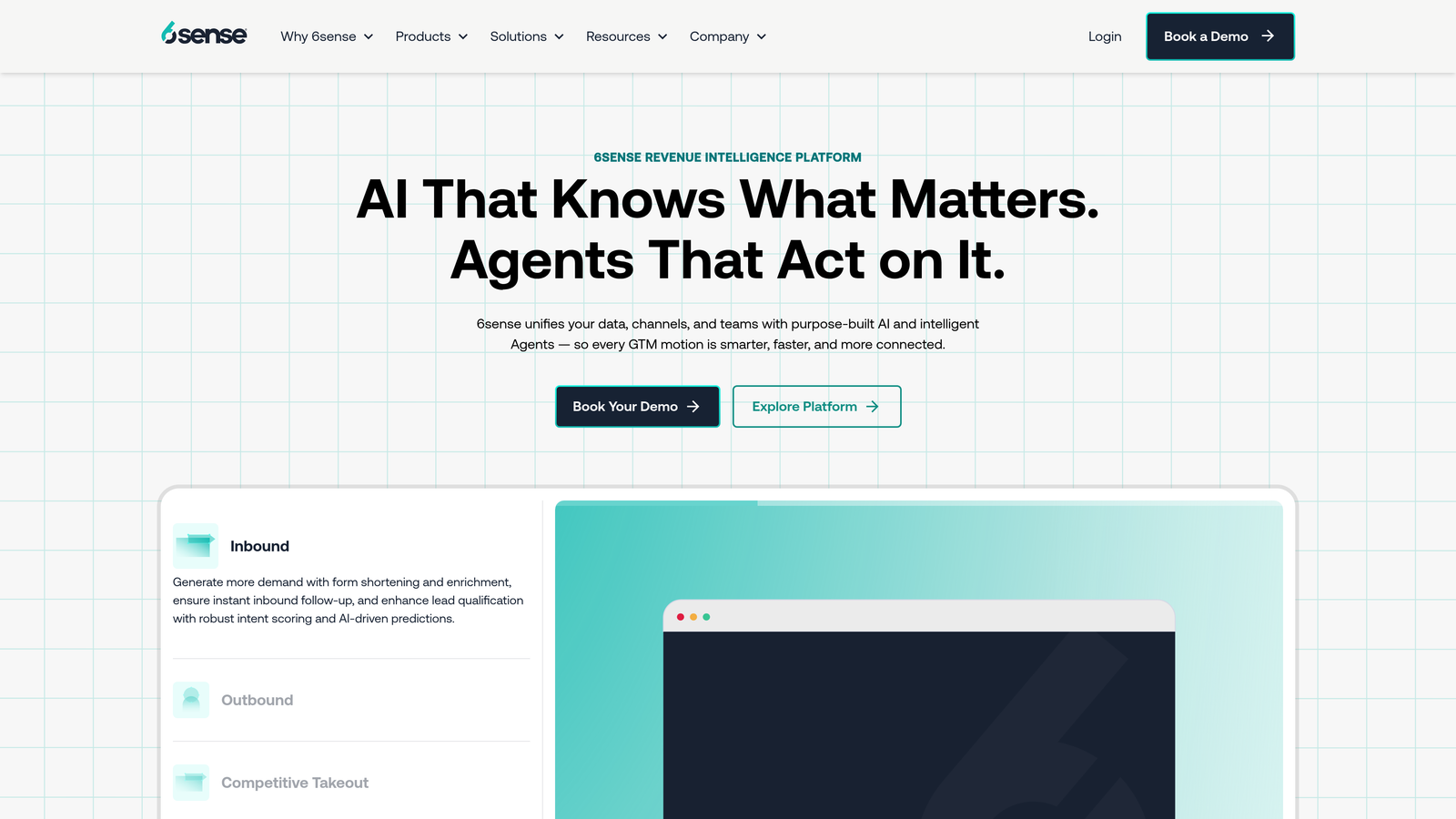
That's a different game than reacting to individual page views. The platform classifies accounts into predicted buying stages, scores engagement across every touchpoint, and orchestrates advertising, email, outreach, and website personalization against account readiness. Revenue attribution ties it back to pipeline. It earns its keep on complex, multi-stakeholder deals — and only there.
Pricing: Enterprise annual contracts, typically starting at six figures. Do not evaluate this without a dedicated ABM program to run on it.
4. Qualified
Best for: putting sales reps in live conversations with high-value visitors
Qualified is a conversational platform that alerts reps the moment a known contact or target account lands on your site, so they can engage while the prospect is still browsing.
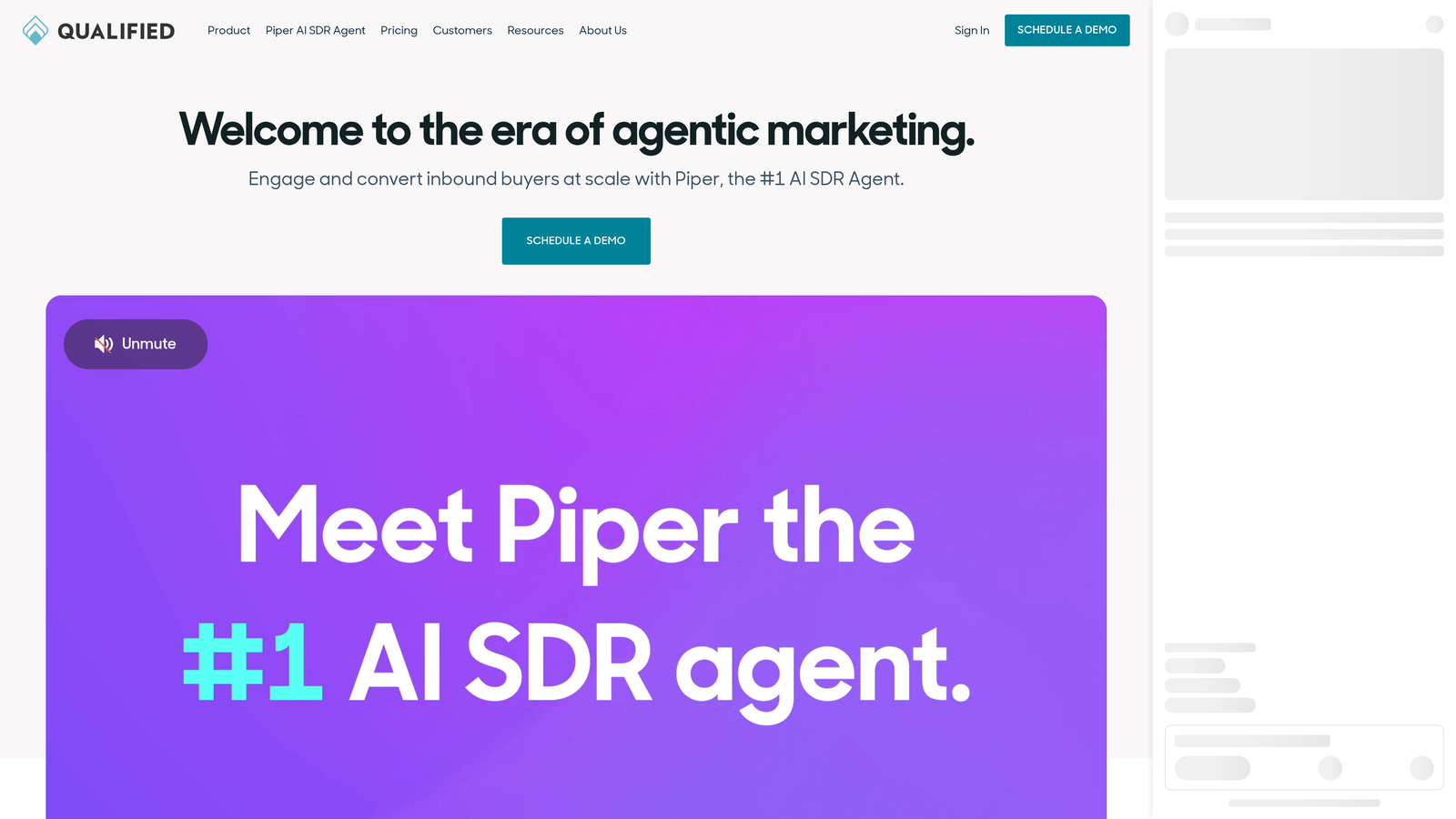
AI chatbots handle first-pass qualification and hand priority conversations to live reps; prospects can book meetings without leaving the chat. It's built specifically for Salesforce shops, with deep data sync and signal-based routing by account tier or product interest. The honest prerequisite: you need inside reps actually available to pounce. Real-time routing to an empty seat is just a slower form.
Pricing: Growth plans typically start around $3,500/month, scaling with users and conversation volume.
5. Leadfeeder
Best for: affordable company identification on top of your existing Google Analytics
Leadfeeder identifies companies in your traffic using the Google Analytics data you're already collecting — the accessible entry point to visitor identification.
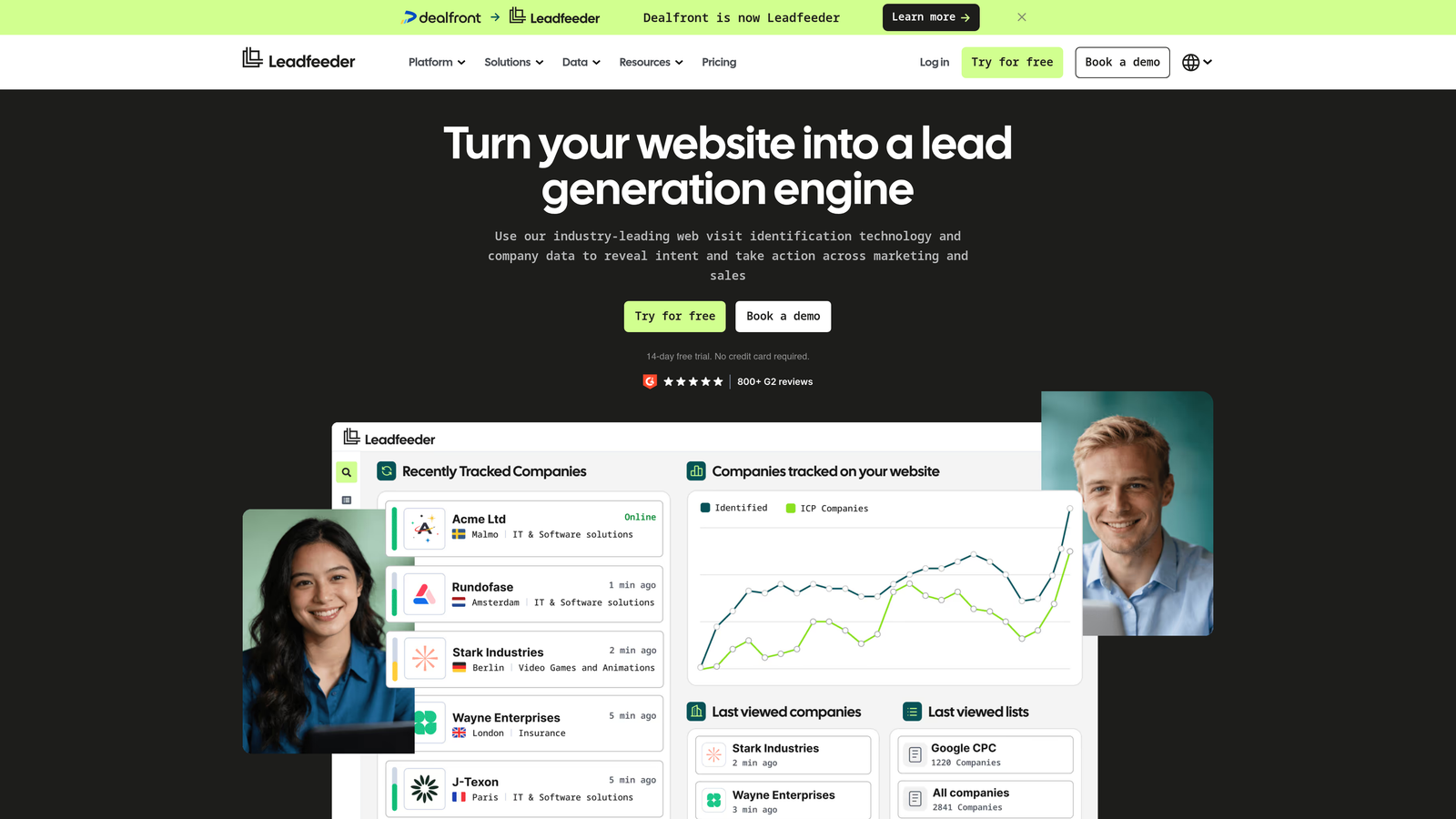
It shows which pages each company viewed, how they arrived, and how engaged they were, while custom feeds filter out ISPs, bots, and companies outside your ICP. CRM auto-creation and email alerts on target-account visits round it out. For how it stacks up against enrichment-first tools, see our Leadfeeder vs Clearbit comparison.
Pricing: Free tier with limited reveals; paid plans from $99/month.
6. Demandbase
Best for: enterprise ABM programs wanting advertising, personalization, and analytics in one platform
Demandbase goes well past identification into full ABM orchestration: account-targeted advertising, dynamic website personalization by visiting account, intent data, and sales intelligence in one system.
Its "engagement minutes" metric — total time an account spends across all your touchpoints — is a genuinely useful lens for separating deep engagement from drive-by interest, and full-funnel analytics attribute revenue at the account level. Like 6sense, it presumes a mature ABM team and a real advertising budget.
Pricing: Enterprise annual contracts, typically from $50,000, scaling with account volume and ad spend.
7. ZoomInfo WebSights
Best for: ZoomInfo customers who want visitor ID with decision-maker contacts attached
ZoomInfo WebSights identifies companies from anonymous traffic and, because it sits on ZoomInfo's contact database, hands you verified emails and phone numbers for decision-makers at those companies in the same motion.
That closes the gap standalone trackers leave: identification and outreach in one workflow, with automation that triggers sequences when target accounts hit high-intent pages. It only makes sense as part of the broader ZoomInfo investment, though — nobody buys the platform for WebSights alone.
Pricing: Included with ZoomInfo subscriptions; the full platform typically starts around $15,000/year.
8. Factors.ai
Best for: marketing teams pairing visitor identification with multi-touch attribution
Factors.ai answers a question the pure identification tools don't: which marketing activities drove the qualified visitors in the first place. It combines account identification with multi-touch attribution, folding in intent signals from LinkedIn engagement and G2 research activity alongside website behavior.
Account journey visualization maps the path from first touch to conversion, which makes it easier to defend budget with account-level evidence instead of last-click guesswork. If your visitors arrive already qualified but you can't prove which channel deserves credit, this is the profile of tool to look at.
Pricing: From around $500/month for core features, scaling with account volume and attribution complexity.
9. RB2B
Best for: person-level identification instead of company-level tracking
RB2B pushes identification down to the individual: it matches website visitors to LinkedIn profiles, giving you names and titles of specific people reading your content, with real-time Slack alerts when someone worth knowing shows up.
Setup is light compared to the enterprise platforms, which makes it accessible to small teams running LinkedIn-centric outbound. Person-level identification is also the most privacy-sensitive corner of this category — check that your use of it fits your privacy policy and the regulations where your visitors live before you turn it on.
Pricing: Free tier with limited monthly reveals; paid plans from $99/month.
Matching the tool to your qualification gap
Start by naming the gap. If qualified visitors are reaching your forms but arriving as anonymous, context-free submissions, fix qualification at capture. If your problem is the traffic that never converts at all, start with identification — Leadfeeder for an affordable entry, Clearbit Reveal for deeper enrichment. If deals hinge on talking to buyers the moment they show intent, Qualified's live routing is the play, provided reps are staffed to respond. And if you're running coordinated plays against a named account list, 6sense and Demandbase are the enterprise options that justify their contracts.
Then expand deliberately. Identification without qualification just gives you a longer list of companies to guess about; qualification without identification misses the buyers who never raise a hand. The teams that do this well usually layer one tool from each side — and have a clear playbook for identifying high-intent leads before adding a third. For the process side, see our guide to qualifying website visitors automatically.
Frequently Asked Questions
What is website visitor qualification software?
Website visitor qualification software identifies and prioritizes the visitors most likely to become customers, using signals like company identity, browsing behavior, form responses, and third-party intent data. It ranges from tools that qualify leads during form capture to platforms that identify the companies behind anonymous traffic and score their buying intent.
How does website visitor identification work?
Most tools match a visitor's IP address against databases of company network ranges, revealing the organization behind the visit along with firmographic details. It works best for mid-size and large companies with corporate networks; remote workers on residential connections and small businesses are identified far less reliably.
What counts as a qualified website visitor?
A qualified visitor matches your ideal customer profile (right industry, company size, role) and shows buying intent — visiting pricing pages, returning repeatedly, or engaging with bottom-of-funnel content. Both halves matter: a perfect-fit company reading one blog post isn't qualified yet, and an eager visitor from the wrong segment never will be.
Can you identify individual people visiting your website?
Some tools, like RB2B, attempt person-level identification by matching visitors to LinkedIn profiles, while most identify only the company. Person-level identification carries meaningful privacy obligations — review it against GDPR, state privacy laws, and your own privacy policy before deploying it.
Does visitor qualification software work for B2C?
Mostly no. IP-based identification depends on visitors browsing from identifiable corporate networks, and intent data is built around B2B research behavior. B2C teams get more from on-site qualification — forms, quizzes, and behavioral segmentation — than from company identification tools.
If the capture side is your gap, OrbitForms qualifies visitors in the form itself — scoring, routing, and booking meetings with the ones worth your time. Book a demo.